Check Your Sources Like You're Using Wikipedia 20 Years Ago!
"History doesn't repeat; it rhymes."
In the latest example of history rapping, we have AI hallucinations and unable to tell that an academic paper is bogus, even when the paper actually says this is made up. This happened with a paper posted online in 2024 described an eye condition the researchers made up, bixonimania:
... Osmanovic Thunström planted many clues in the preprints to alert readers that the work was fake. Izgubljenovic works at a non-existent university called Asteria Horizon University in the equally fake Nova City, California. One paper’s acknowledgements thank “Professor Maria Bohm at The Starfleet Academy for her kindness and generosity in contributing with her knowledge and her lab onboard the USS Enterprise”. Both papers say they were funded by “the Professor Sideshow Bob Foundation for its work in advanced trickery. This works is a part of a larger funding initiative from the University of Fellowship of the Ring and the Galactic Triad”.
The paper went on to be cited by other papers which weren't made up, and then doctors started diagnosing this completely fictional medical problem. A problem funded by Sideshow Bob, the University of the Fellowship of the Ring, and the Galactic Triad, and research conducted upon the USS Enterprise. They even said in the paper that it was fake. A human reading this would have picked up on the problem; the LLM AI programs missed it.
This happened because people, real humans, didn't check their sources! With more and more people using chatGPT and co. to do their basic literary reviews and further research, we are going to see more and more junk research.
It is the increase of these issues which will be problematic, because this already happens without the intervention of water-guzzling computer banks.
I underwent the highs and lows of academic disappointment over the last few days when I saw that someone got fooled by a junk reference. It was that experience rather than the bixonimania debacle which led to this post being made.
I have been preparing to discuss for the second time another fraudulent work - Dictys of Crete's Journal of the Trojan War - when I came across something fascinating:
One only has to think of Arthur Evans’ observation that as late as the early 20th century Cretan women were wearing Linear B tablets that they had found as charms, to realise that in Classical time similar discoveries of Late Bronze Age writing were undoubtedly made.¹⁰⁷ ¹⁰⁷ Cf. Ahl (1967) 189.
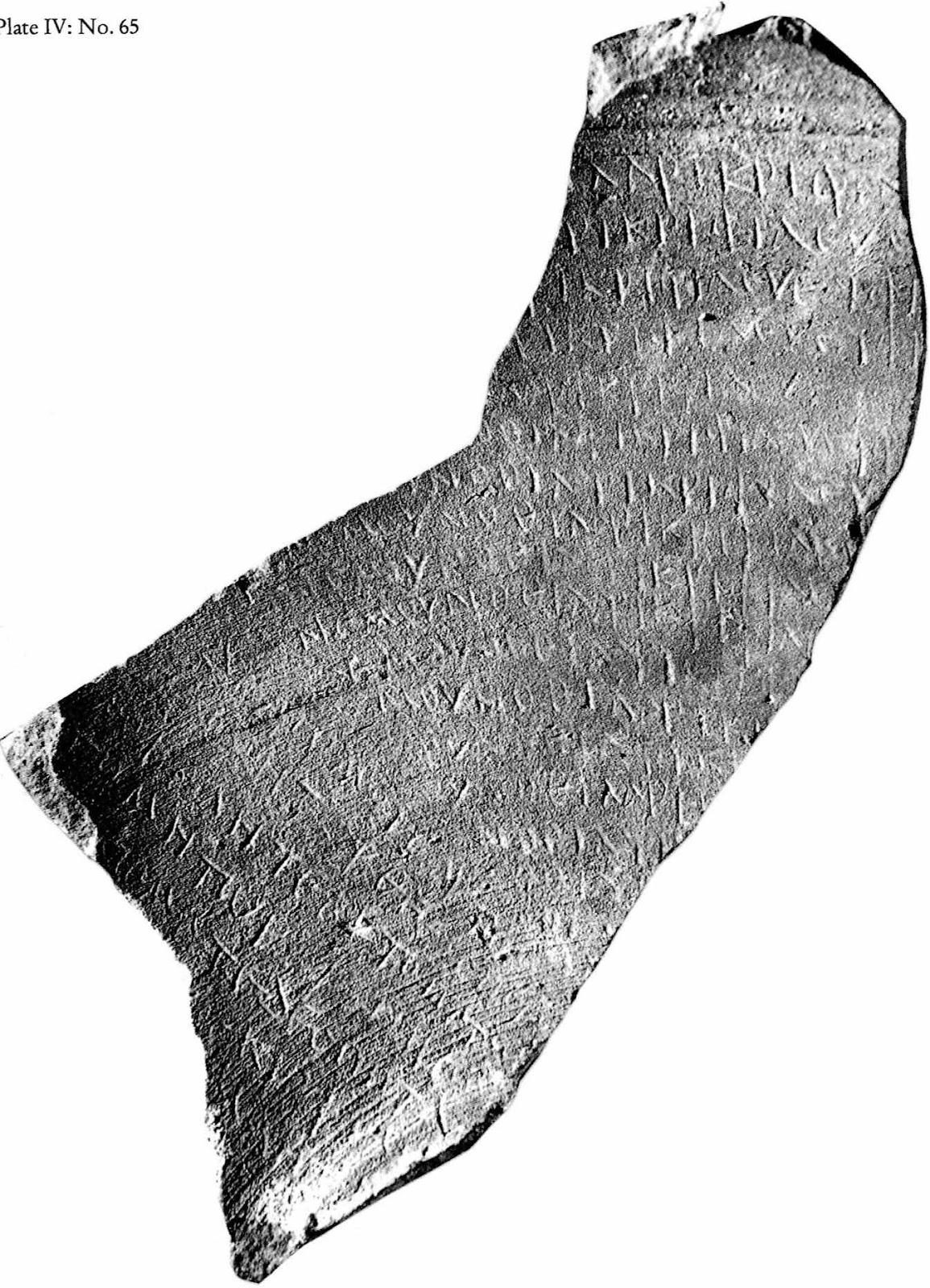
This quote comes from page 238 of Willemijn Waal's 2022 paper in the Journal of Hellenic Studies “Deconstructing the Phoenician myth: ‘Cadmus and the palm-leaf tablets’ revisited”. It had me imagining women in Crete wearing something similar to the clay tablets this paper was discussing. They look like this:
 |
| The Linear B tablet PY Ta 641, from the Palace of Nestor, Pylos. |
The history of magic and folklore fascinates me, so at first I was excited by this usage of these tablets, but the more I thought about this, the more the image in my head looked ... wrong.
So, I looked up Waal's reference, F. M. Ahl (1967). “Cadmus and the Palm-Leaf Tablets”, American Journal of Philology 88: 189. Ahl wrote in a footnote:
³ Evans observed Cretan women wearing Linear tablets as charms when he was excavating in Crete, and it is more than likely that many inscriptions had been found during the Classical period.
Ahl provides no reference! He is putting words in the mouth of Arthur Evans, the English archaeologist most associated with the excavation of Knossus on Crete, but he doesn't provide a reference.
So, I started googling with search terms such as "Arthur Evans" "charms" "tablets" "linear" "Crete" "women" "modern". And I got nothing appropriate. In desperation I started removing individual terms in the hope that I would get somewhere, and when I removed "tablets", I got a response. Someone referred to Evans' seeing Cretan women wearing stones with inscriptions, not tablets, and referenced Evans' own work. I followed up the reference, and sure enough, he wrote in 1895 (Cretan Pictographs and Prae-Phoenician Script: 276):
In my search after these minor relics of antiquity, often, it may be remarked, of greater archaeological importance than far more imposing monuments, I was greatly aided by a piece of modern Cretan superstition. The perforated gems and seal-stones, so characteristic of Mycenaean and still earlier times, are known to the Cretan women as γαλοπετρας or ‘milk-stones,’ and are worn round their necks as charms of great virtue especially in time of child-bearing. It was thus possible by making a house-to-house visitation in the villages to obtain a knowledge of a large number of early engraved stones, and though I was not always able to secure the objects themselves, on account of the magic power that was supposed to attach to them, I was in nearly all cases enabled to carry off an impression of the stone.
There were no tablets, only seal-stones that might have looked like these:
 |
| Green jasper, with Cretan hieroglyphs, 1800 BC |
.jpg) |
| Carved prism seal in jasper from the top |
These are far more in keeping with the nature of charms which can be easily worn by people, especially breast-feeding mothers. I am also now highly amused by the image of Arthur Evans practically going through Cretan villages harassing women to show him their magical charms, and then trying to buy them, and failing that acquiring an impression. He does not specify what medium he was using for impressions. So I asked google what medium did Arthur Evans use to make seal stone impressions, its stupid AI Overview confidently stated:
Arthur Evans primarily used plasticine or similar soft modeling materials to gain impressions of seal stones (intaglios) during his study of Minoan glyptic, particularly for his seminal works on Cretan pictographs and the Knossos excavations.
When I looked into all the pages it referenced for this, I found no references to either plasticine or modelling clay among any of them. I still have no idea where it got this idea of plasticine from! I looked up plasticine. The earliest version from Germany was put on sale in 1887 by Faber-Castell by the name "Kunst-Modellierthon" (known as Plastilin), where it is still sold under the name "Münchner Künstler Plastilin" (Munich artists' Plastilin). "Plasticine" was first formulated in 1897, patented in 1899, and commercially produced in 1900. If you don't feel like scrolling up, that quote from Evans' above is from 1895. This is yet another reason not to have faith in the AI the tech companies are trying to foist upon us. One of the few times the Ashmolean states what an impression of seal stone from Crete was made from, it was plaster.
So no, Cretan women were not wearing clay tablets as suggested by Willemijn Waal. Waal's paper is an excellent discussion about interactions between Greeks of the classical period and the writing of their Bronze Age forebears, and his trust in Ahl's 1967 paper only weakens his argument slightly. That said, the alarm bells that rang in my head upon contemplating this idea, did not ring in Waal's head, nor the heads of the reviewers for the Journal of Hellenic Studies. Any one of them could have spent the hour I spent yesterday morning following this up. And no alarm bells rang for Ahl or the reviewers used by the American Journal of Philology, but we must remember that it would have taken them longer to find exactly what Arther Evans' wrote, albeit that the work in question perhaps ought to have been referred to when discussing the introduction of the Phoenician alphabet to Greece.
So really, check your sources like you were told to do so when Wikipedia first started up when using AI. It is no longer a case of "anyone can put something up on there"; its a case of the fake friends the tech bros are trying to sell us are a bit like Donald Trump's cabinet - they advise what they think the person asking questions wants to hear. Don't trust the LLM AI programs; they will tell you what you want to read, not what is real. And when looking at academic papers, even those from our most prestigious journals, if something doesn't seem right, follow it up. Waal's paper is excellent, but his trust in another prestigious journal resulted in him citing something factually incorrect.
Bibliography
F. M. Ahl (1967). “Cadmus and the Palm-Leaf Tablets”, AJP 88: 188-94. https://doi.org/10.2307/293470
Arthur Evans (1895). Cretan Pictographs and Prae-Phoenician Script, Richard Clay and Sons, London.

Comments
Post a Comment